
Calhoun County Bench Warrants Explained
A bench warrant is an arrest order tied to a failure to meet a court duty. Possible Calhoun County triggers include a missed criminal or traffic date, failure to answer a citation, noncompliance with a payment or other order, contempt, probation issues, or a missed family or child-support hearing. The actual order controls.
Georgia municipal-court guidance states that a missed date can lead to a bench warrant and arrest. Traffic cases can also produce a DDS license consequence. Those are separate records. Jury, support, and supervision cases require direct court confirmation because Calhoun posts no single local bench-warrant policy.
A bench warrant does not establish a new criminal charge by itself. It records the judge's response to an unmet duty in a case already before the court. The docket may also show a citation, payment order, probation condition, bond term, or hearing notice that explains the trigger. Ask the clerk to identify both the warrant and that underlying event. Calhoun County publishes no local rule saying that every missed setting produces the same result, so the individual order remains the reliable source.
Calling before travel matters. Some Georgia sheriff offices require an in-person warrant inquiry, and an active order can lead to custody. Calhoun does not post its own phone-disclosure or walk-in policy. A person checking an own case should give the full legal name, birth date, case or citation number, and court. A lawyer can then help determine whether a reset request, recall motion, surrender plan, or first appearance is needed.
How Calhoun County Bench Warrants Are Issued
The judge assigned to the underlying case decides whether to issue the order after a missed setting or failure to comply. Magistrate Court handles county limited criminal work. Superior Court handles felony, probation, family, and other trial-court files. Municipal judges handle city traffic and ordinance matters within their authority.
The court records the order, and an authorized agency may hold it for service. Georgia has no public statewide warrant database. The order remains open until service, return, recall, quash, or another judicial disposition.
Service and recall belong to different authorities. The Calhoun County Sheriff, Leary Police, Arlington Police, Edison Police, or another authorized agency may execute process, depending on the venue. Yet the serving officer cannot erase the judge's order. Once an arrest or other event occurs, warrant paperwork returns to the proper court for the case to continue. That is why a Sheriff status answer should be compared with the issuing court's docket.
Georgia Uniform Magistrate Court rules also describe the return of original warrants and the first-appearance process after arrest. Those statewide rules help explain movement, but Calhoun has not posted a local handoff chart. Ask the clerk where the original now sits, whether it has been returned, and what event the docket shows next. A returned warrant may mean paperwork moved back to court; it does not automatically mean the charge or case ended.
Bench Warrants and Arrest Warrants Compared
A bench warrant responds to a court-compliance event. An arrest warrant rests on probable cause for an alleged crime. Both authorize custody, but the trigger and supporting record differ. Confirm the type with the issuing court. The separate arrest warrant process addresses sworn complaints and first appearance.
| Feature | Bench Warrant | Arrest Warrant |
|---|---|---|
| Trigger | Missed date, FTA, or noncompliance | Probable cause of an offense |
| Who issues | Judge in the existing matter | Authorized judge or magistrate on sworn facts |
| Underlying case | Existing case or duty | Criminal allegation |
| Response | Reset, recall, quash, or appearance | Legal advice, surrender, bond, and defense |
A probable-cause arrest warrant may begin with sworn information about an alleged offense. A bench warrant usually begins inside an existing case when the court finds a missed duty. The distinction affects which papers to request. For a bench matter, seek the hearing notice, failure-to-appear entry, warrant order, and later recall or return. For an arrest warrant, the complaint and probable-cause materials may matter, subject to access limits.
Calhoun's local sources do not publish one code that cleanly labels every order. A court may use FTA or bench-warrant language, while a caller may hear capias. Confirm the exact term instead of assuming that all labels carry the same trigger, bond rule, or resolution path.
Resolving a Calhoun County Bench Warrant
Gather the full legal name, birth date, court, case or citation number, and missed-date notice. Call the issuing clerk. Ask whether the court permits a written excuse or reset, whether a judge must recall the warrant, and whether payment, bond, counsel, or an appearance is required.
- Confirm the warrant and the court that issued it.
- Ask counsel whether a recall or quash motion, reset, or planned surrender fits the case.
- Call the Sheriff at (229) 849-2555 and jail at (229) 849-2480 before any required appearance.
- Follow the exact court-approved payment, appearance, or bond terms.
- Keep the recall order, docket entry, receipt, and new setting notice.
Caution: Consult counsel before appearing because Calhoun publishes no safe-surrender schedule, walk-in recall docket, or guaranteed bond process.
No Calhoun County bench-warrant list, motion-to-recall form, filing fee, bond amount, or warrant-clearing day was found. These are facts to confirm, not blanks to fill. Ask whether the judge accepts a written explanation, requires counsel to file a motion, sets a new appearance, or orders surrender. If bond may be available, ask the jail where it is accepted, which payment forms are allowed, and whether a licensed surety may submit papers. None of those logistics is posted as a countywide promise.
Bond secures a later appearance; it does not dismiss the underlying case. Likewise, a new hearing date does not necessarily withdraw an arrest order unless the judge says so. Before ending the call, repeat the case number and ask the clerk to name the document that will prove recall. After the court acts, confirm that the Sheriff or city agency received the update.
Finding the Court That Issued the Warrant
Calhoun Magistrate Court uses (229) 849-2115 for county warrant and preliminary matters. The Clerk of Superior Court uses (229) 849-2715 for felony, probation, family, and related files. The issuing judge controls recall, not the Sheriff.
Arlington uses (229) 725-4276 and Edison uses (229) 835-2323 for municipal-court questions. Leary routes calls through (229) 792-6121, while Morgan uses (229) 849-4045. The Calhoun County warrant lookup explains how to trace an unknown venue.
The distinction between venues is practical. Arlington and Edison publish municipal-court addresses, but Leary and Morgan provide routing numbers without a current posted warrant counter. A city clerk may need to direct the caller to the current record keeper. For county preliminary matters, Magistrate is the better start. For a Superior felony, probation, or family file, the Superior Court Clerk can identify the docket and assigned court.
Calhoun's Sheriff number is for service questions, while the jail at (229) 849-2480 handles custody and bond logistics. Neither office can replace the municipal or Superior judge who issued the warrant. If the paper is missing, ask each office to confirm the venue before disclosing details, then record the court name, case number, warrant status, and date of the answer.
Calhoun Bench-Warrant Proof
Clearance should rest on a court record. Keep the signed recall or quash order, docket entry, payment receipt, and new setting. Then ask the serving agency whether its system reflects the change. A receipt may prove payment but not judicial withdrawal.
The official Georgia request guidance pictured here shows how a focused records request identifies the custodian and record sought.
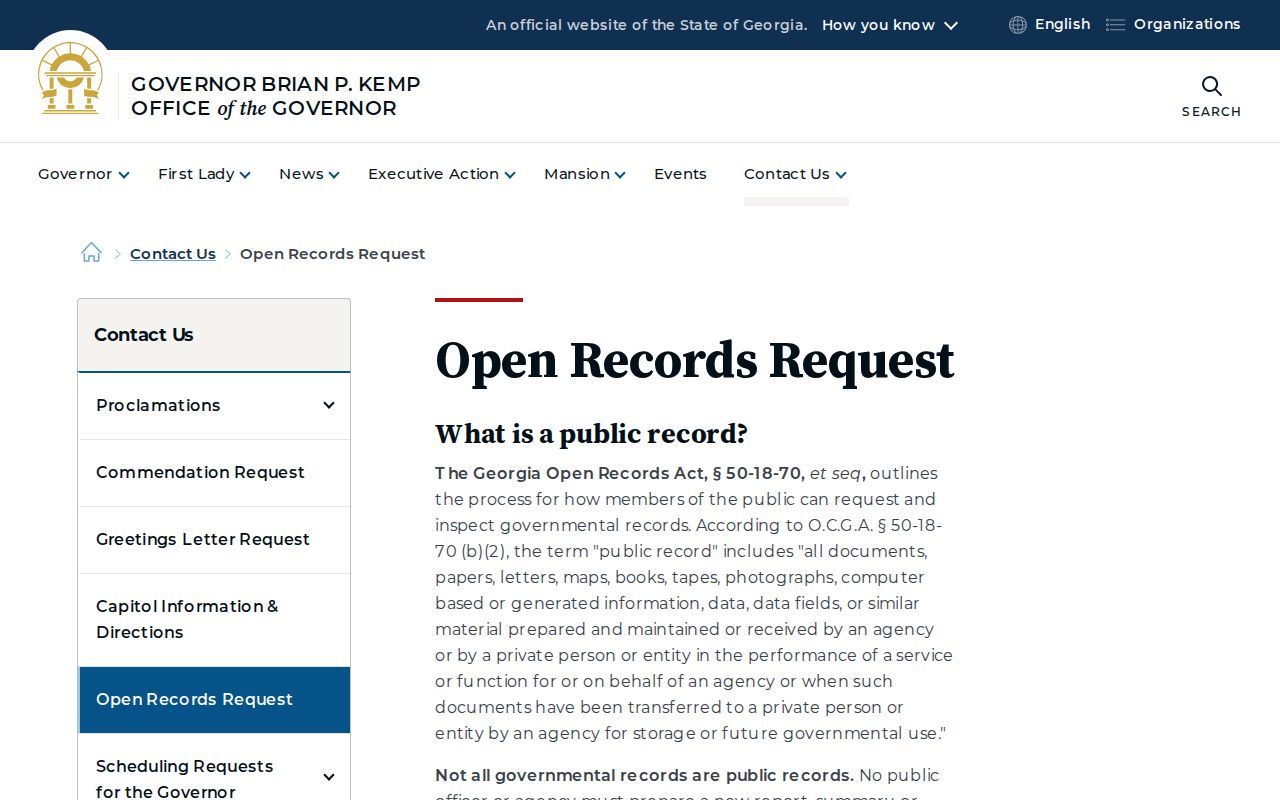
Request the issue date, court, status, return, and recall entry rather than asking an agency to create a new report.
Calhoun Warrant Access Limits
The Georgia Open Records Act supports access to agency records, but exemptions and confidentiality rules still govern. Search-warrant papers are not open until execution or return under O.C.G.A. § 17-5-22. Juvenile law-enforcement records are generally restricted under O.C.G.A. § 15-11-708.
The Attorney General open-government page shown here explains the Act and its limits.
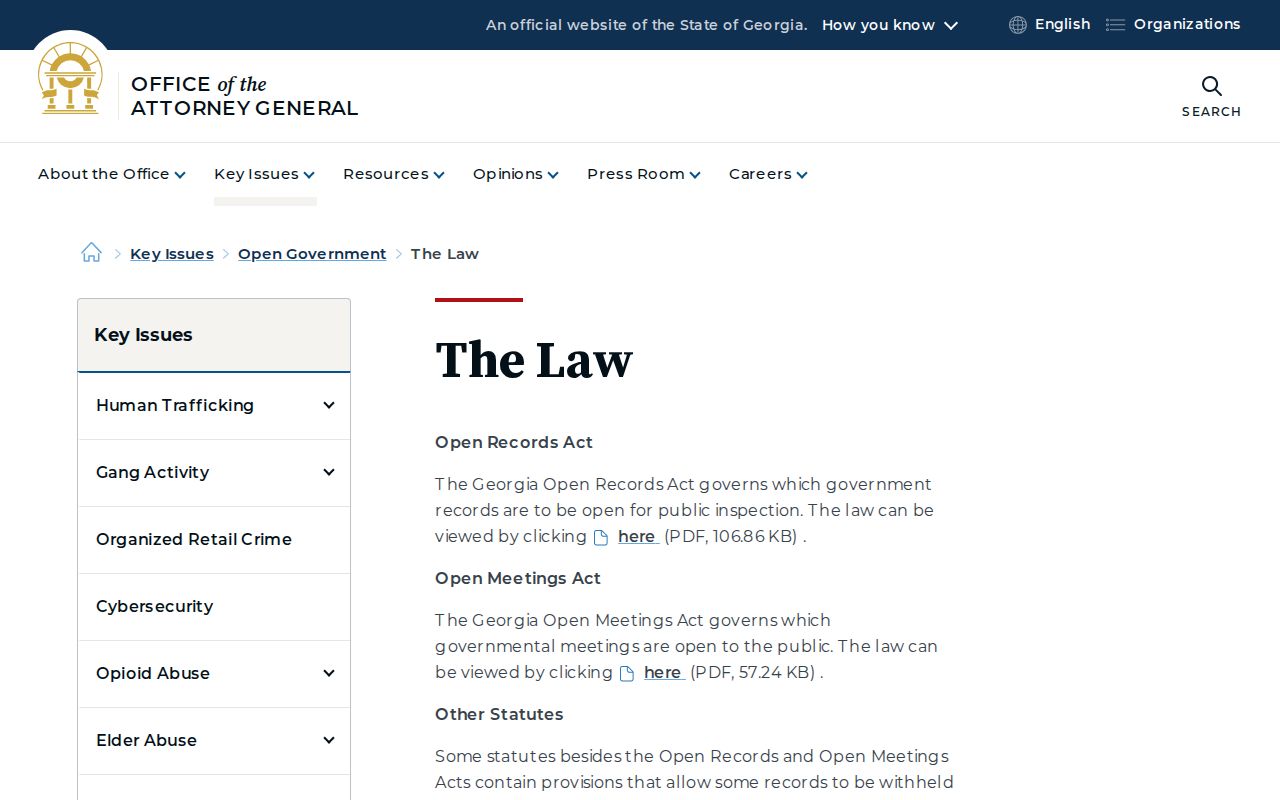
A denial should identify the legal basis. Restricted access is not proof that no order exists.