
Calhoun County Arrest Warrants Explained
An arrest warrant is a judge's order letting police take someone into custody. Any of several Georgia judicial officers can issue one. A Superior, State, city, or Magistrate Court judge signs it, and in some towns another authorized municipal officer can too. The signing comes only after a judge reviews sworn facts showing probable cause. That standard means a reasonable basis to think an offense happened and that the named person took part. It is more than a hunch. It is also far short of a trial verdict, which comes later, if ever. For county matters, start with Calhoun County Magistrate Court. That office handles warrant applications, preliminary proceedings, first appearances, and warrant returns, and it takes direct questions at (229) 849-2115. Felony trials belong to the Superior Court of the South Georgia Judicial Circuit, whose criminal files sit with the Clerk of Superior Court. City courts can also issue process within their own authority. Edison's charter, for example, expressly lets its municipal judge issue arrest warrants in ordinance cases and act with magistrate-like power over some state-law offenses committed inside the city.
Calhoun Arrest Warrants Begin in Court
The paperwork usually starts with a sworn complaint or affidavit from an officer or prosecutor, though a private applicant can pursue one too. O.C.G.A. § 17-4-40 adds notice and warrant-application hearing requirements in those situations. The judge then weighs the facts rather than rubber-stamping an accusation, and the issuing court creates the warrant record and sends the process out for service. For Calhoun County felony filings, the Clerk of Superior Court is the record keeper. The official county 19 clerk profile names that clerk and lists the courts the office manages.
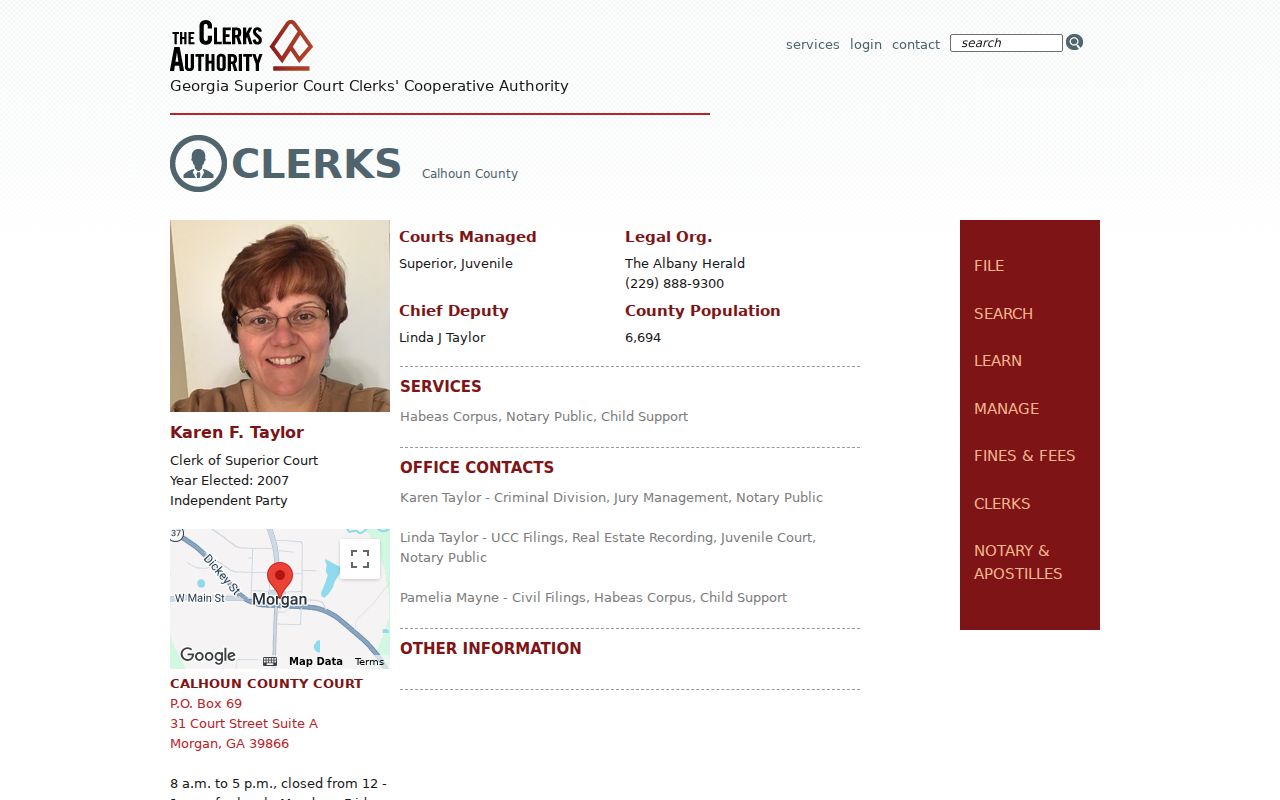
These roles stay separate in Calhoun County. A magistrate field answers issuance and return questions, the clerk speaks to a filed felony case, and the Sheriff speaks to service or custody. No single office sees every stage at once.
Inside a Calhoun County Arrest Warrant
Calhoun County publishes no sample warrant entry and no local warrant-number format. A real record can still carry certain fields, set by the issuing court and the case's stage. Ask for each field by name. And never read a blank online result as proof that no warrant exists.
A short docket entry may cite the probable-cause affidavit without spelling out its details. Search-warrant materials follow different access rules in Calhoun County. Juvenile records are generally restricted.
Calhoun Arrest Warrant Access Channels
Calhoun County posts no online active-warrant list. The practical warrant search is a short chain instead. Ask the likely issuing court first, then confirm service or custody with the Sheriff. When a record is not posted, a narrow Georgia Open Records Act request works.
- Call the Sheriff’s Office at (229) 849-2555 about county-held or service information.
- Call the jail at (229) 849-2480 for custody and bond logistics, not a legal ruling.
- Call Magistrate Court at (229) 849-2115 about applications, first appearance, and returns.
- Call the Clerk of Superior Court at (229) 849-2715 for filed felony docket records.
- Contact Arlington, Edison, Leary, or Morgan Municipal Court for city-issued process.
Georgia runs no single statewide warrant portal. DDS tracks only the license effect of a reported traffic failure to appear, not Calhoun County arrest warrants.
Serving Arrest Warrants in Calhoun County
Several hands can execute an arrest warrant here. The Calhoun County Sheriff, city police, or another authorized agency may serve it. The South Georgia District Attorney partner directory lists the Sheriff plus the Arlington, Edison, and Leary police departments, but it does not map warrant classes to specific units. Ask the issuing court which agency holds the process now. After an arrest, Georgia Uniform Magistrate Court Rule 24.2 sends the original warrant back to Magistrate Court or its designee, which transfers it to the prosecuting agency. Rule 25.1 then requires a first appearance promptly and no later than 72 hours after a warrant arrest, unless bond is made sooner. There the judicial officer covers the charge, counsel, silence rights, commitment, and bond.
Affidavit to First Appearance Timeline
In Calhoun County, the path starts with sworn facts in an affidavit and ends with a first appearance. A judge reviews, a warrant issues, and an agency gets assigned to serve it. Each step leaves its own record. A new warrant may sit unfiled in Superior Court, while a return waits in Magistrate Court before transfer.
- Identify the likely offense venue and issuing court.
- Ask whether a warrant was issued and which agency received it.
- Confirm surrender and bond logistics through counsel and the holding agency.
- Attend the required first appearance or scheduled court hearing.
- Obtain written proof of any recall, return, disposition, or release.
Wondering about a hearing date in Calhoun County? The South Georgia Judicial Circuit calendar page lists dockets, but it is not a warrant lookup.

A Calhoun County court date on a calendar proves nothing about the warrant. Only the issuing court's written record settles whether it stands.
Comparing Arrest, Summons, and Bench Warrants
Three Calhoun County court actions, each with different triggers. The label decides who holds the file and what response is safe.
| Process | Main trigger | Effect | First contact |
|---|---|---|---|
| Arrest warrant | Probable cause for an alleged offense | Authorizes custody | Issuing court and counsel |
| Summons | Court directs an appearance | Requires a response | Court named on the paper |
| Bench warrant | Missed appearance or noncompliance | Authorizes arrest | Judge’s clerk and counsel |
Calhoun County sources say "bench warrant for failure to appear," not a confirmed local "capias pro fine" label. A capias can be process directing apprehension, so ask the clerk for the exact docket term. A search warrant is another thing entirely. It authorizes a search, and its supporting material stays restricted until execution or return under O.C.G.A. § 17-5-22.
Original Warrant Return and Transfer
Serving the paper is not the end of it. Georgia's rules send the original warrant back to Magistrate Court or a designee. From there it transfers to the proper prosecuting authority. That is why, in a recent case, the court, the clerk, and the serving agency in Calhoun County can each hold a different snapshot of the same file. The circuit's Calhoun County contact page puts the Clerk, Sheriff, and Probate/Magistrate channels together in one place.
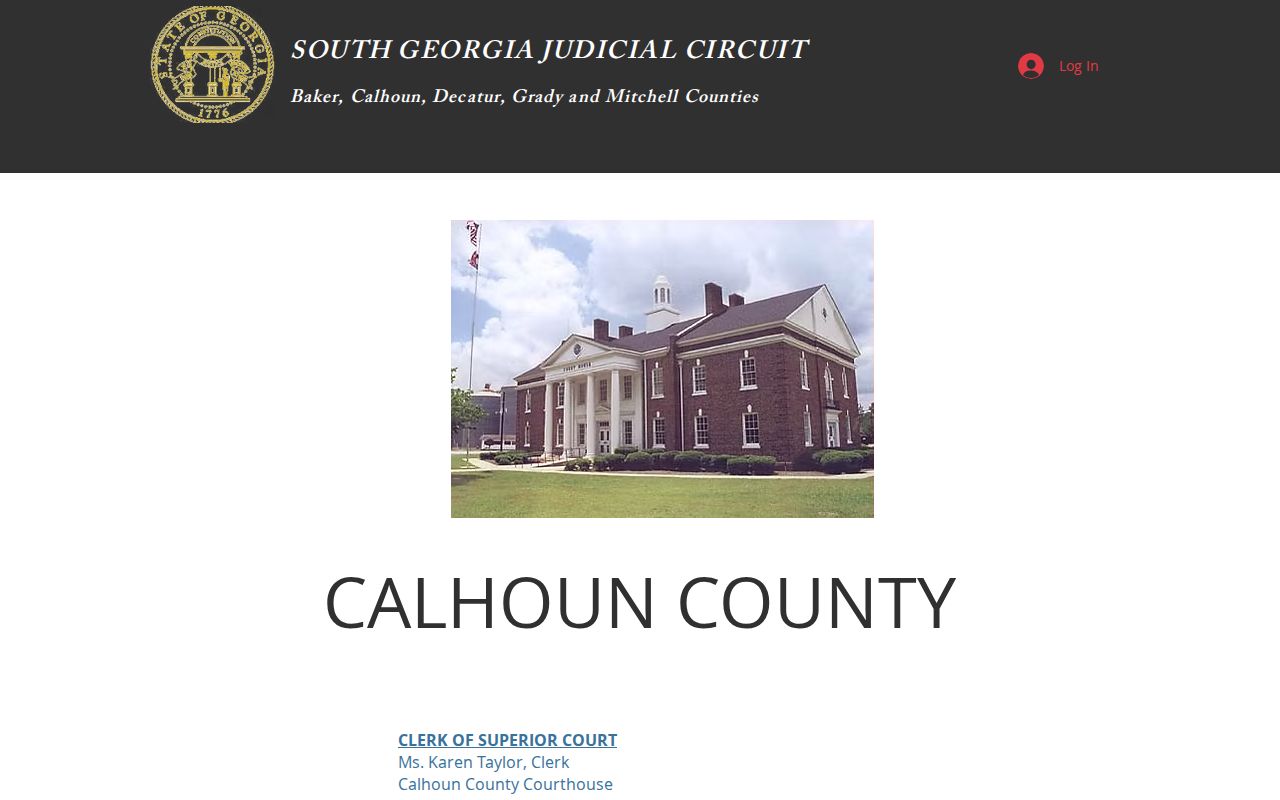
For Superior Court material, the Clerk of Superior Court website provides the courthouse route.
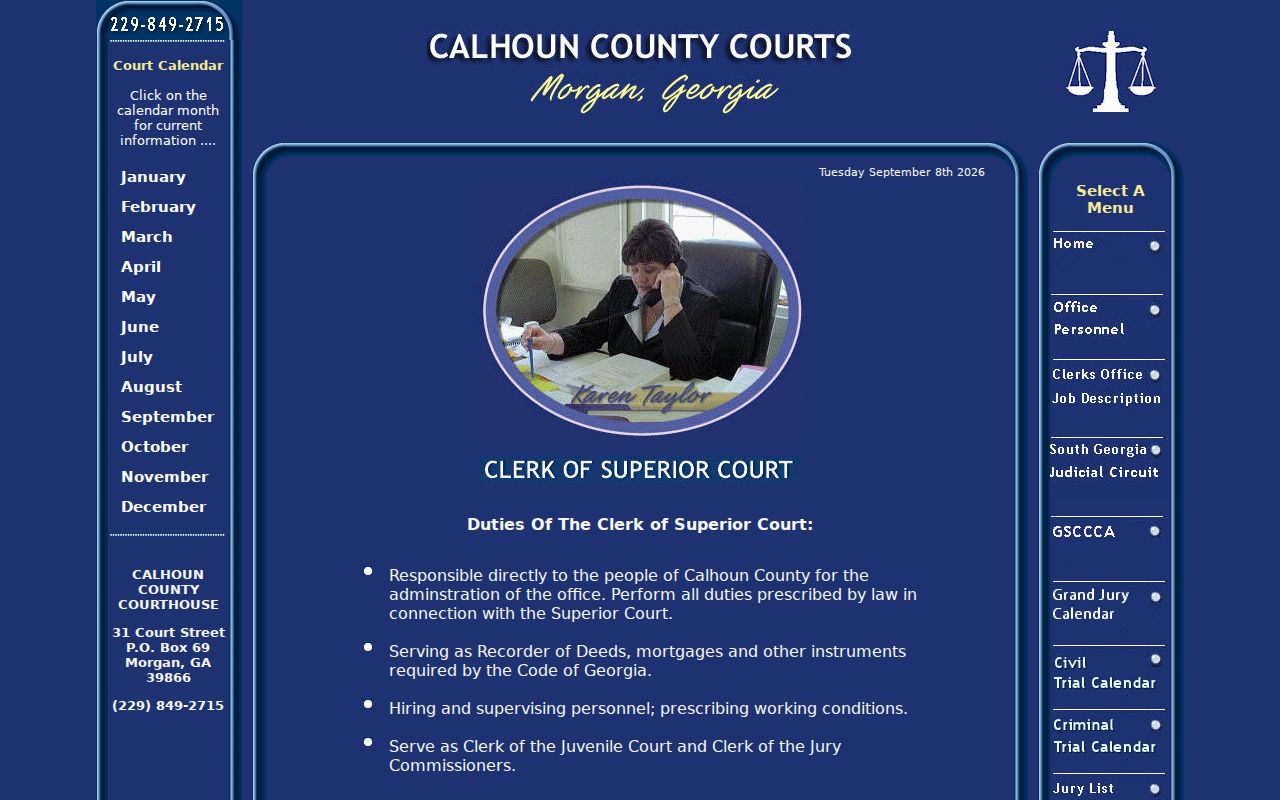
Ask the Calhoun County clerk for the warrant number, case number, current status, and the latest return or transfer date. Those details beat a guess built on a name alone.
If There's an Arrest Warrant for You
Do not act on a rumor. Call the issuing court and a Georgia defense lawyer before you show up anywhere in Calhoun County. Counsel may confirm the record, seek a recall, arrange a court date, coordinate a walk-through or planned surrender, and learn the bond terms. None of that is guaranteed.
Important: Confirm surrender and bond logistics before appearing; Calhoun County does not publish a guaranteed walk-in process or bond-window schedule.
If surrender is required, ask where to report in Calhoun County, whether a judge must address bond first, what payment form is accepted, and when first appearance will happen. A bond is security for release and future court dates. It does not end the case. Get every order and receipt, then verify that any recall or status change was actually entered.
When No Calhoun Warrant Appears
A blank online search proves very little. Calhoun County posts no public warrant database. A warrant signed yesterday may still be sitting in a queue waiting on data entry, and a city case can remain with a Municipal Court. A warrant already served may not show up elsewhere. Juvenile records and unexecuted search-warrant material may be restricted. So take the direct route. Write a narrow request with the full legal name, date of birth, county, likely court, and any case or citation number, then ask whether the status is active, served, recalled, quashed, or cleared. Under the Georgia Open Records Act, O.C.G.A. § 50-18-70 et seq., the request goes to the records officer. State guidance uses a three-business-day response framework and allows reasonable search, redaction, and copying costs. Written confirmation from the issuing court is the safest endpoint.